
Some styles fade with time, others evolve, but a rare few never lose their soul. Flemish style is one of them. Rooted in history but still deeply relevant today, this design language brings warmth, texture, and meaning into any home.
In this article, we’ll explore the origins of Flemish style, its defining features, and how to effortlessly incorporate it into your space.
Where Does Flemish Style Come From?
The Flemish style finds its roots in Northern Belgium, specifically the region of Flanders, which has long been a melting pot of Dutch, French, and Spanish influences. This region flourished in the 16th and 17th centuries, both economically and artistically, and the homes, furniture, and interiors from this time reflect a deep appreciation for craftsmanship and authenticity.
The Flemish aesthetic is closely linked to the Golden Age of Flemish painting, where artists like Jan van Eyck, Pieter Bruegel the Elder, and Peter Paul Rubens depicted richly textured interiors, rustic elegance, and layered lighting that continues to inspire interior designers today.

Flemish Style in Art and Design
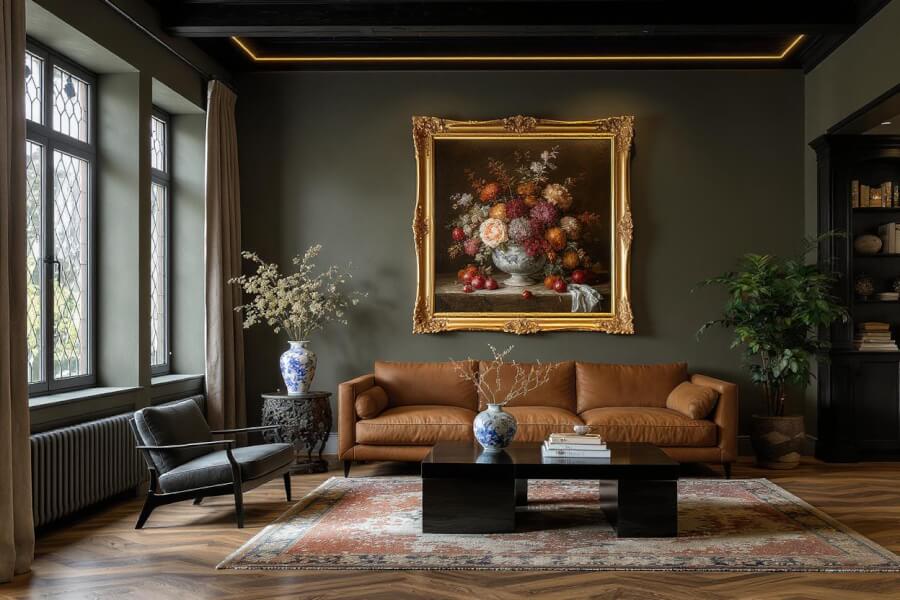
The Flemish interior is deeply tied to its artistic tradition. Walk into a room inspired by this style, and it might feel like stepping into a 17th-century painting.
-
Still-life compositions -fruit bowls, pewter pitchers, and dried flowers are often used as decor.
-
Paintings and tapestries are central, often displayed in restrained but intentional ways.
-
Symmetry and balance play a subtle but essential role in how objects are arranged.
What makes Flemish style unique is that it feels like art, even when it’s just a simple kitchen or sitting room. It’s quiet, intentional, and textured, like a poem written in objects.
If you want to know more about Flemish in art and why it is important, CREAR explains it better in this video:
Key Characteristics of Flemish Style
Flemish style is not about flashy decor or strict minimalism but character, age, and texture. These are the hallmarks that define it:
-
Natural Materials
Think limestone floors, reclaimed wood beams, linen upholstery, wrought iron details. Nothing feels synthetic or overly polished. -
Muted, Earthy Color Palettes
Soft grays, creamy whites, faded greens, warm taupes, and stone browns, all reminiscent of a painting aged over time. -
Rustic Meets Refined
A Flemish home might pair a weathered farm table with hand-carved chairs or a stone fireplace with an antique chandelier. -
Tall Windows and Soft Light
Light is never harsh. Interiors feel moody, calm, and lived-in, often using natural light filtered through linen drapes. -
Aged Finishes
Patina is prized. From chipped paint to distressed wood, imperfections are embraced as part of the charm. -
Ornate Simplicity
You’ll often see subtle architectural elements, arched doorways, fluted columns, and paneled walls, but nothing feels overdone. -
Timeless Furnishings
Flemish interiors include high-backed chairs, solid wood cabinetry, and stone countertops that feel both old and enduring. - Garden Connection
Flemish style often extends into the outdoors with a simple but timeless garden. Expect neatly bordered beds, climbing roses, stone paths, and weathered benches, all reflecting the same aged, lived-in elegance as the interior.
What the Flemish Style Brings to Your Home
This design language does more than just look beautiful. It feels beautiful. Here’s what it adds to a space:
✔️ A Sense of History – Every piece tells a story, making your home feel layered and meaningful
✔️ Calm and Comfort – With muted colors and organic textures, the atmosphere is serene and grounding
✔️ Sustainable Beauty – A focus on reclaimed, natural materials means it’s timeless and environmentally kind
✔️ Understated Elegance – It doesn’t shout for attention. Instead, it draws you in slowly, like good wine or soft music
How to Bring the Flemish Style Into Your Home
Even if your home isn’t in the Belgian countryside, you can channel this style with intentional choices and with a little help from AI. Here’s how to start:
1. Use Magic Redesign to Explore the Look
Just describe your vision: “Turn my kitchen into a Flemish-style rustic space with natural wood, stone textures, and soft lighting.” Our AI will reimagine your room in seconds.
2. Strip Away the Modern Clutter
Use Furniture Removal to get rid of anything that doesn’t serve the style like modern plastic chairs, bright decor, or mismatched pieces.
3. Apply the Flemish Style Filter in Perfect Redesign
Choose “Interior” as the space type and select “Flemish” as the design style. This instantly brings in the key elements: aged wood, limestone, linen, and symmetry.
4. Add Textures with Fill Spaces
Want a rustic bench, linen drapes, or a still-life corner? Fill Spaces lets you add Flemish elements to blank spots with ease.
5. Make Precision Tweaks with Precision+
Swap out shiny handles for wrought iron, or replace a polished table with one that looks centuries old, without redesigning the whole room.
6. Use Material Swap to Get the Right Finishes
Change modern finishes to aged oak, limestone, handwoven textiles, or antique metals. Upload your desired material, and instantly see it applied to furniture, flooring, or decor with realistic results.
A Style That Stays Forever
The Flemish style is not trendy, it’s timeless. It’s a whisper of the past brought into the present with grace. And whether you’re revamping a single room or your entire home, this style offers the kind of beauty that deepens, year after year.
Let HomeDesignsAI help you create it without guesswork, mistakes, or delays. Just your vision, made visible.